


I was hoping to post this blog last night, but the hotel wi-fi wasn’t working last night or this morning.
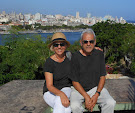
Cusco is just as attractive during the day as it is at night, but completely different. You can clearly see the hills around it and the colors of the colonial buildings around the plazas and the old stones from Inca times glistening in the sun.
The first thing we did is walk with our guide Rony to Qorikancha. Qorikancha is a very interesting place because it combines the Inca temple of the sun with the convent of Santo Domingo built by the Dominicans on the site of the Inca temple, using some of the materials from that temple. We mostly concentrated on the Inca temples and Ronnie told us a lot of interesting facts and hypotheses about the construction of the temples. One amazing fact was that during the two very strong earthquakes in Cusco -- in 1650 and 1950 --- all the Inca structures survived intact while later structures collapsed. They built their temples and palaces with stones of different shapes, some of them interlocking, but without any mortar or connector.
Then, Ronnie took us to two other most important churches in Cusco --- a Jesuit Iglesia de la Compania and the Cathedral, which consists of three connected churches. They are beautiful churches that combine Catholic and indigenous religions and beliefs. There is a lot of gold there with gold-plated altars and chapels and many very interesting paintings of the Cuscan school (Escuela Cuscquenia) painters from the 17th century. We also saw paintings and a sculpture of the Lord of the Earthquakes who according to the local legend stopped the earthquake of the 1650 after the crowd had prayed to him. This sculpture of black crucified Jesus is paraded every year during solstice day around the city of Cusco.
Ronnie also told us that Cusco has about 500,000 inhabitants and two universities -- one public and one private.
After the tour, Ania and I went to see the best hotel in town, hotel Monasterio, which is located in a converted convent, very much like hotel Santo Domingo in Antigua or El Convento in San Juan. It is very lovely and very expensive.
In the afternoon, we took the stuff we packed for a two day trip to Machu Picchu and got on the bus. We were to spend the first night in a little town in the Urubamba valley next to the train station so we can take a morning train to Machu Picchu. We made two stops on the way. The first stop was in the village of Pisaq, famous for its crafts market. We spent about 2 hours shopping. We were disappointed because we had expected a much more variety and better quality of goods. We bought some trinkets, but nothing substantial. We were hoping to find nice alpaca sweaters, but no such luck. We had a very good lunch (obiad) in a restaurant run but a German woman, Ulrike.
The second stop was in a house and workshop of a well known Peruvian ceramic artist Pablo Seminario. Andrew knows him well so Pablo showed us around his studio, told us about his designs and showed us some of the pieces from his collection. It was very interesting.
Now, we are in the village of Ollantaytambo in our hotel (Hotel Pakaritampu), which is new and very nice, but does not have wifi either.

No comments:
Post a Comment